


EV Body Repair: What Panel Beaters and Painters Need to Know About High-Voltage Safety
 16.11.2026
 6 mins to read
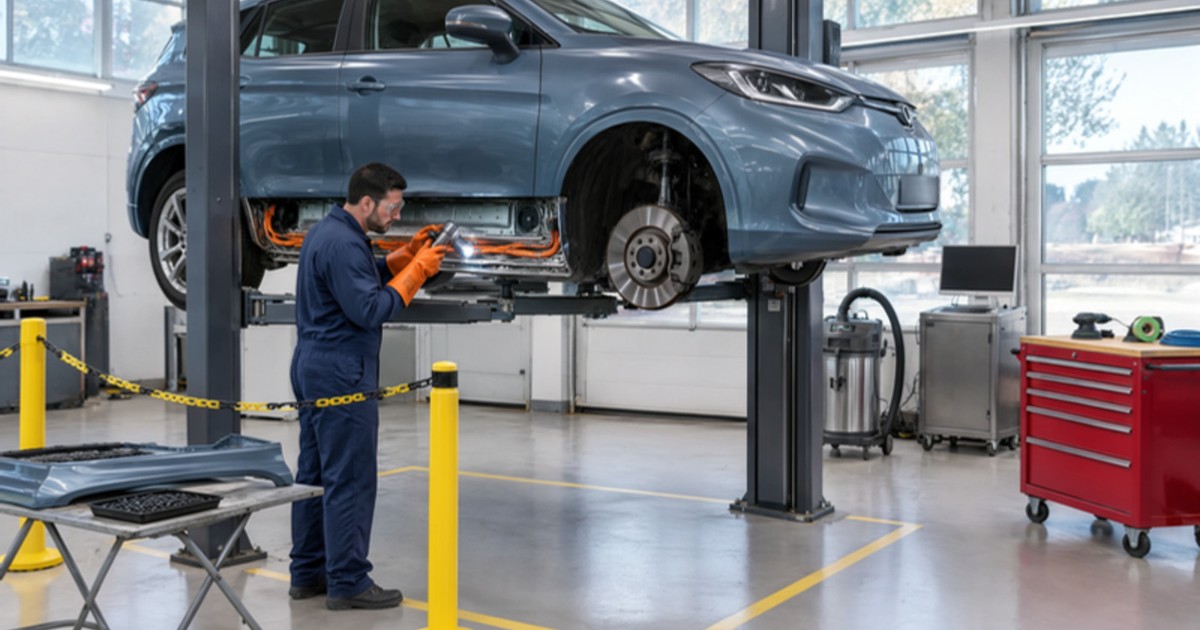
A silver hatchback comes in with a crumpled sill and a scuffed rear quarter. Nothing unusual. Strip, pull, prep, paint.
Except the badge on the boot says “e”. Under that sill there could be an orange cable carrying several hundred volts. Under the floor, a battery pack worth up to 40% of the car’s value.
That is EV body repair in 2026. The job looks the same from the outside. The risks, the rules and the skills behind it are not.
Electric cars are already in your booth
Battery electric cars made up close to 30% of new car registrations in the UK this summer, the largest single powertrain in the market. Those cars do not stay new. They get kerbed, rear-ended and side-swiped like everything else, and they end up in bodyshops.
The people who can work on them safely are in short supply. According to the IMI, only around 1 in 4 UK technicians held an EV qualification at the end of Q3 2025, and EV training actually fell by nearly 13% during 2025. The IMI’s own vacancy tracker shows demand for EV technicians up 59% year on year.
For panel beaters, paint sprayers and vehicle preppers, that gap is an opportunity. For bodyshops, it is a capacity problem waiting to happen.
Why EV body repair is different
The metal and the paint are familiar. What sits behind them is not.
- High voltage where you do not expect it. Orange high-voltage cables can run along the sills, under the floor and through the engine bay. Cutting, drilling or pulling in the wrong place is dangerous.
- The battery is part of the structure. Most purpose-built EVs use a “skateboard” layout, with the battery pack in the floor. Underbody and structural repairs follow different methods from a petrol car.
- Not every EV looks like one. Some electric and hybrid models are almost identical to their petrol versions. Identification has to happen before anyone picks up a tool.
- Heat matters. Paint booth bake cycles, welding and heat guns all put heat near a high-voltage battery. Always check the manufacturer’s repair method for temperature limits before the car goes in the booth.
- Damage can be hidden. A kerb strike or underbody impact can damage the battery casing with little visible sign. Damaged EVs need checking and, where in doubt, parking in a safe, separate area.
None of this makes EV repair something to be afraid of. As the IMI puts it, the risks are manageable once they are understood. The key word is understood.
The training levels in plain English
The IMI’s EV awards are recognised through IMI TechSafe, a register that shows employers and insurers who is qualified to do what. For bodyshop staff, the levels break down roughly like this:
| Level | What it covers | Typical bodyshop role |
|---|---|---|
| Level 1 – awareness | Recognising EVs and hybrids, knowing the hazards, staying safe around them | Preppers, valeters, yard and reception staff |
| Level 2 | Routine work on and around electric and hybrid vehicles, preparing them safely | Panel beaters, MET and strip fitters, paint sprayers |
| Level 3 | Safely making the high-voltage system safe (de-energising) and repairing or replacing system parts | Senior MET, lead technicians, the “go-to” EV person |
| Level 4 | Diagnosis, testing and repair of electric and hybrid systems and components | EV specialists and diagnostic technicians |
Exact course names vary by provider, so always check what a qualification actually allows before someone works on a live vehicle. The principle is simple: the closer you get to the high-voltage system, the higher the level you need.
Five habits of a safe EV bodyshop
- Identify first. Every car is checked for electric or hybrid drive at booking-in, not halfway through the strip.
- Make it safe before you start. A qualified person makes the high-voltage system safe and confirms it before any cutting, welding or pulling.
- Follow the manufacturer’s method. Repair methods, sectioning points and booth temperatures come from the OEM, not from memory.
- Keep a safe parking area. Damaged EVs are kept apart from other vehicles and buildings until they have been checked.
- Know who is qualified. Keep a simple list of who holds which EV level, so the right job goes to the right person every time.
What this means if you are a panel beater or painter
EV skills are quickly becoming the difference between a good CV and a great one. A panel beater or painter with an EV qualification on top of solid accident repair experience is exactly what busy bodyshops are struggling to find.
If you are already doing the work, ask your employer about Level 2 or Level 3 training. If you are thinking about your next move, read Vehicle Prepper to Paint Technician: What’s the Real Career Path? and see how qualifications open the next step.
Looking now? Browse the latest bodyshop jobs in the UK or upload your CV and tell us about your EV training.
What this means if you run a bodyshop
EVs add one more skill to a workshop that is already short of people. It is the same story as ADAS: the equipment is the easy part, the bottleneck is the qualified person. Our guide to static vs dynamic ADAS calibration shows how one missing skill can hold up the whole repair flow.
Three practical steps:
- Check your cover. If your only Level 3 person is off sick tomorrow, who makes the next EV safe?
- Train the people you have. Upskilling an experienced panel beater is faster and cheaper than finding a ready-made EV specialist.
- Hire with EV in mind. When you recruit, ask about EV training up front and make it part of the role.
When you need extra hands, Meenz supplies experienced bodyshop staff across the UK, on temp, temp-to-perm or permanent terms.
Need panel beaters or painters who know their way around an EV?
Meenz Recruitment was born in the bodyshop. We recruit panel beaters, paint sprayers, MET technicians and preppers for bodyshops across the UK. Brief us on the role, contact the Meenz team or register your company.
Technician with EV experience? Upload your CV or browse workshop jobs. Know someone good? Refer a friend to Meenz.
Sources
- IMI – EV TechSafe technician data (reported February 2026)
- IMI – Vacancy Tracker 2026
- Thatcham Research – EV Blueprint (March 2026)
- IMI MotorPro – How electrification is changing our approach to vehicle repair
- SMMT – new car registrations, summer 2026