


2030 Won’t Hire Panel Beaters. It’ll Hire People Who Can Do It All
 13.08.2026
 6 mins to read
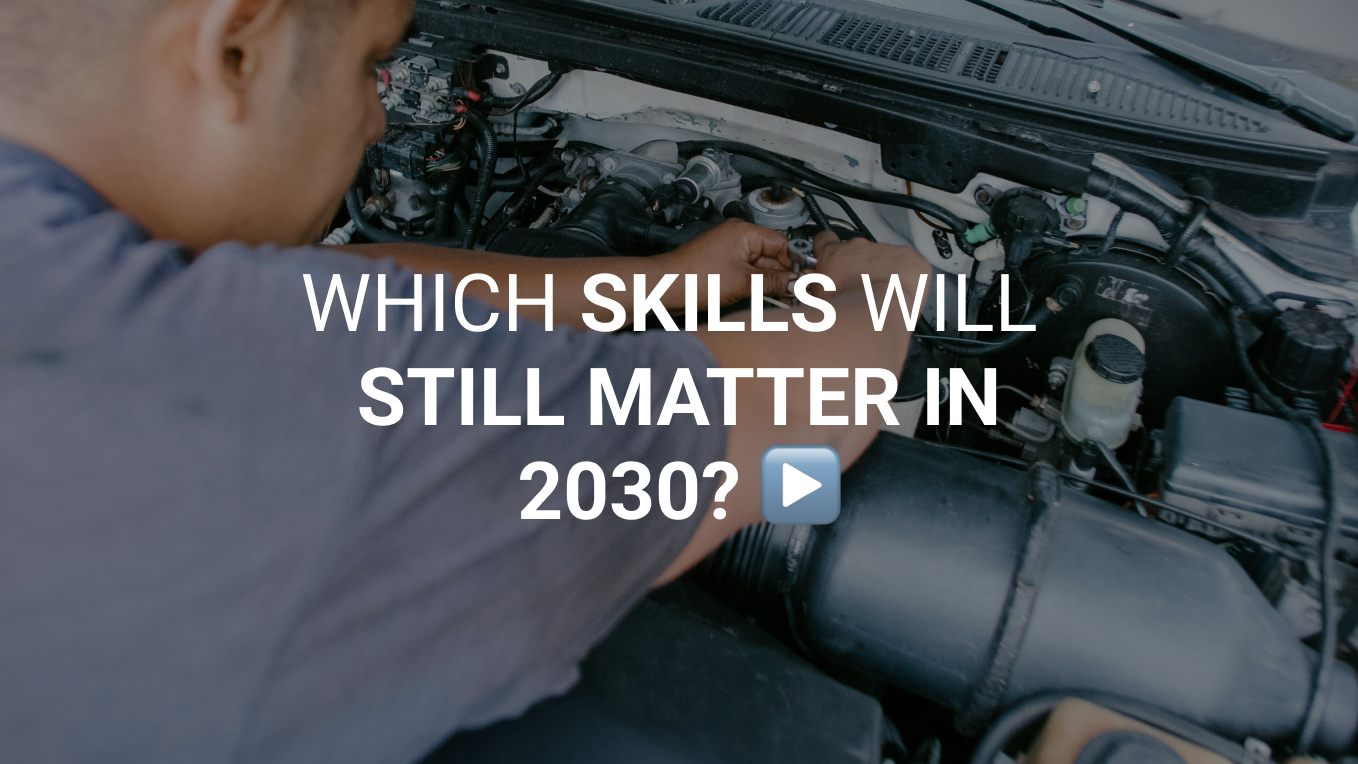
Repair costs are up 50% since 2019. Everyone blames the parts, but the real cause is the skills gap, and that is already on your invoices. Here is where it is hiding.
The skills gap is a current cost, not a future risk – for every company
Only 3% of UK technicians are currently qualified to work on ADAS, against a projected need of 220,000 qualified specialists by 2032. One in four technicians is qualified to work on electric vehicles, and the automotive industry faces a shortfall of 44,000 EV-trained technicians by 2035. In practice, most bodyshops cannot calibrate or safely repair a large share of the vehicles already on the ramp.
That gap has a price attached to it. EVs are proving 25% more expensive to repair on average than ICE vehicles and take 15% longer to repair, largely due to battery replacement costs ranging from £5,000 to over £20,000. IMI data show that only 26% of the UK technician workforce was EV-qualified at the end of Q3 2025, with those skills concentrated in the franchised dealer network rather than the independent bodyshop sector. If your team is not EV-qualified, that work does not vanish. It goes to the dealer network that trained for this years ago, and it does not come back.
Four competencies that will decide who is still standing in 2030
This is not about bolting a course onto someone’s CV. It is about a team that can switch between technologies on the same vehicle, on the same day.
- ADAS calibration as a standard step after body repair, not just after a windscreen swap
- Mixed-powertrain diagnostics: ICE, hybrid and BEV handled by the same team, without farming the car out to a specialist
- Structural repair across mixed materials: steel, aluminium, composites and structural bonding, all under one roof
- Damage assessment and estimating that accounts for calibration, material and downtime, not just parts cost
None of these sits with one person. They sit across the whole workshop, and the next section breaks down what each of those four competencies actually demands from each worker and role.
The gap does not land the same way on every role or job
Each specialism in your team is being pulled in a different direction, which means ‘upskill the workshop’ is not just a plan but several separate plans.
Panel beaters are moving from single-material careers into mixed-material ones. Steel, high-strength steel, aluminium and structural adhesives each demand different joining techniques, and 2030-ready technicians need to move between all of them on the same repair rather than specialising in one.
Paint and refinish technicians now need to identify and correctly treat a wider range of substrates, including steel, aluminium, GRP and carbon fibre, on top of managing UV, infrared and catalytic curing systems and safe handling of high-voltage components on modern vehicles. Refinish is a substrate science and no longer just colour matching.
Vehicle damage assessors and estimators need working knowledge of all powertrains and an up-to-date grasp of ADAS, enough to turn that into a defensible estimate and avoid under-scoping a recalibration that leaves a safety system never properly reset.
SMART repair and PDR technicians are not exempt from this either. Minor cosmetic repairs increasingly happen on panels sitting close to high-voltage battery packs, structural adhesives and sensor housings, which means even a scuff or a dent job now carries a safe-working and component-awareness requirement that didn’t exist five years ago.
Bodyshop managers are the ones absorbing all three shifts at once, scheduling a mixed-skill workforce, managing insurer relationships that increasingly scrutinise calibration and material costs, and deciding where to spend a limited training budget across five roles that are all changing simultaneously.
Where you are now, and where you need to be by 2030
Every one of the four competencies above has a current baseline and a 2030 threshold, and the gap between the two is not the same size across categories. Some are close to catching up. Others have barely started:
| Area | Current state | 2030 requirement |
| ADAS | 3% of technicians qualified | Calibration as a routine part of every repair |
| EV / hybrid | 1 in 4 technicians qualified | Full mixed-powertrain competence in every shift team |
| Materials | Steel as the default training path, with most technicians still avoiding aluminium repair | Steel, aluminium, composites and bonding as the entry standard |
| Refinish | Colour and finish focused training | Substrate identification across steel, aluminium, GRP and carbon fibre |
| Damage assessment | Baseline parts-cost calculation | Estimating that factors in calibration, material and downtime |
The widest gaps sit in ADAS and EV, which is exactly where the cost is landing hardest right now. That is where the hiring and training budget needs to move first, not the areas that feel most familiar.
Demographics are widening the gap faster than technology is
The 2026 ATMC training benchmarks survey found that 36% of collision repair respondents were aged 55-64, with zero respondents aged 18-24. Your most capable people are retiring faster than the market is replacing them. That doubles the pressure on every competency listed above, in every one of the four roles.
What this means for hiring now, not in three years
The IMI is calling for three things at once: more new entrants into shortage occupations, training aligned with real-world demand, and stronger retention pathways for people already in the sector. For a bodyshop, that translates into three parallel moves.
Firstly, recruit from adjacent trades instead of waiting for a ready-made candidate who ticks every box. Secondly, invest in in-house upskilling for your current team, structured by role rather than as one generic training budget line. Finally, build a progression path that keeps experienced technicians and assessors instead of handing them to the shop down the road once they have done the hard work of training them.
A team that can only do metal and paint will cost you more than the downtime it is supposed to prevent by 2030. The question is not whether you invest in mixed-technology competence across every role in the workshop. It is whether you do it before your competitor does, or after.
If you are already short on panel beaters, paint technicians, VDAs, or anyone else on this list, get in touch with Meenz. We place people who can actually do the job now, not people who might get there eventually.
Sources:
https://www.theimi.org.uk/industry-latest/research/adas-techsafe-technician-forecast-q4-2025
https://wecovr.com/guides/ev-insurance-shock-new-data-reveals
https://skillsengland.education.gov.uk/apprenticeship-standards/st0448-v1-2
https://skillsengland.education.gov.uk/apprenticeship-standards/st0406-v1-0
https://atmc.wildapricot.org/resources/2026/ATMC%20Training%20Benchmarks%202026%20Data%20041026.pdf
https://www.theimi.org.uk/industry-latest/news/accident-and-repair-sector-losing-1700-workers-year